
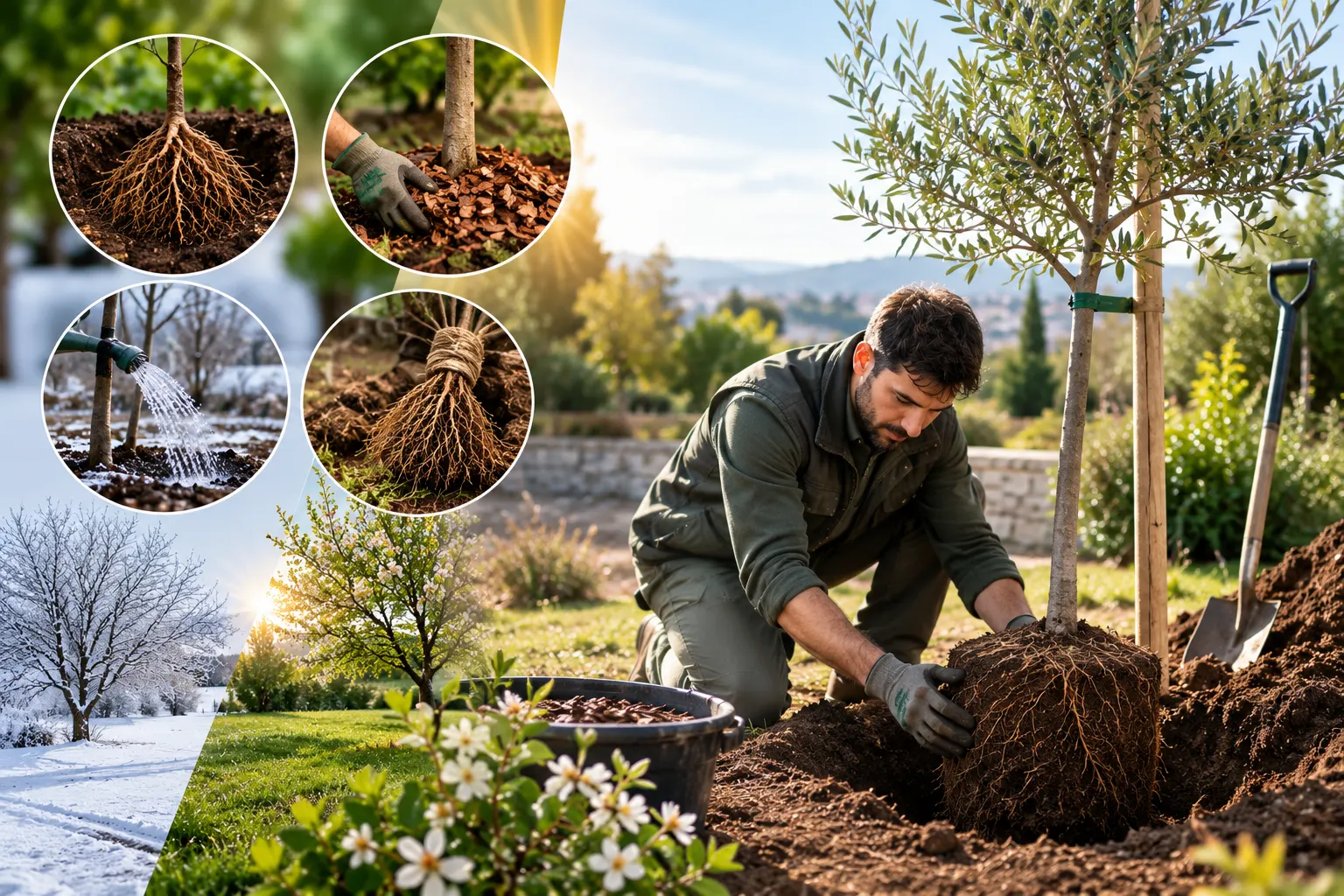
There is a persistent myth in the gardening world: most people believe the right time to plant a tree or a shrub is spring, when nature is in bloom. The reality, however, based on botanical science, proves the opposite.
Planting trees and shrubs during the winter months gives plants a huge adaptation advantage, ensuring vigorous growth and resilience to the extreme conditions of summer.
Discover why winter is the golden opportunity to upgrade your garden and how to achieve the best possible planting results.
The Physiology of Winter: What Happens Below Ground?
During winter, deciduous trees and shrubs enter a state of dormancy. Above-ground activity stops: the leaves fall, the flow of sap slows down and the plant spends no energy on new growth or flowering.
However, below the soil surface, the story is completely different.
As long as the soil temperature stays above 5 degrees Celsius, the root system keeps growing quietly. The tree channels all its energy into spreading its roots, building a strong foundation without the pressure of sustaining foliage.
5 Reasons Why Winter Is Ideal for Planting Trees
1. Eliminating Transplant Shock
When you transplant a tree in spring or summer, the roots struggle to supply water to new leaves and flowers at the same time. This shocks the plant, often leading to wilting. In winter, thanks to dormancy, the plant is not under heat stress and adapts to its new environment painlessly.
2. Building a Strong Root System
A tree planted in December or January has 3 to 4 months to spread its roots into the surrounding soil before the heat sets in. When summer arrives, planting trees in winter pays off: the tree draws water from deeper layers and withstands heatwaves without trouble.
3. Water Savings and Natural Irrigation
Winter rainfall provides steady, deep moisture to the soil, freeing you from daily watering. Rainwater is distributed evenly through the root zone, creating ideal conditions for rooting.
4. Access to Bare-Root Plants
Winter is the only season when you can buy bare-root trees (plants sold without a ball of soil around the roots). Bare-root plants are:
- More affordable: They cost significantly less than potted ones.
- Easier to transport: Light and easy to handle.
- Quicker to adapt: The bare roots come into direct contact with the native soil.
5. Explosive Growth in Spring
With the first rise in temperature in spring, the winter-planted tree is already established in the ground. Instead of spending energy on adapting, it immediately starts producing new shoots, outgrowing any tree planted late in spring.
Step by Step: How to Plant Trees Correctly in Winter
To ensure complete success, follow these technical steps:
- Dig the right hole: The planting hole should be twice as wide as the root ball, but the same depth. Do not bury the root collar (the point where the trunk meets the roots).
- Improve the soil: Mix the existing soil with organic matter or loose compost to improve drainage.
- Apply mulch: Spread a 5-8 cm layer of pine bark or organic material around the base of the trunk. Mulch protects the roots from frost and keeps the soil temperature stable.
- Install support: Winter winds can rock a newly planted tree, damaging its delicate new roots. Put in 1-2 wooden support stakes.
When Should You Avoid Planting?
Although winter is the ideal season, there are two specific exceptions:
- Frozen or waterlogged soil: Don’t dig when the ground is frozen solid or has turned to mud. Wait a few days for it to drain.
- Sensitive tropical/exotic species: Plants that cannot tolerate cold at all (e.g. some citrus trees in mountainous areas) are better planted in late spring.
Invest Today in the Green Future of Your Space
Winter tree planting is not just a gardening task; it is a strategic choice that gives your plants the best possible start. With the right technical guidance and agronomic care, your garden will transform in spring into an oasis of freshness and beauty.
Need help with designing and planting your garden?
Our specialised team handles the design, the supply of certified plants and their safe installation in your space.