

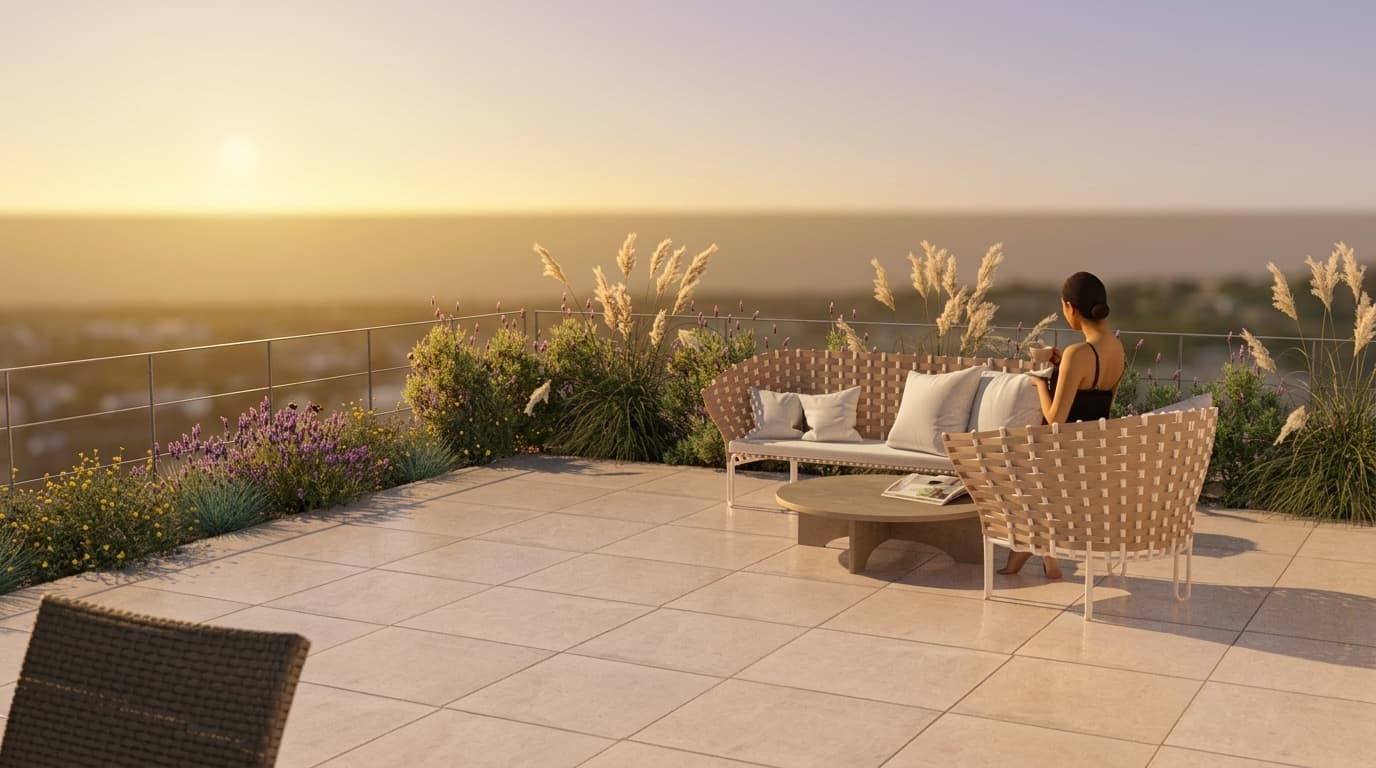
The rapid development of Artificial Intelligence (AI) has revolutionized the way we approach image creation, directly affecting landscape architecture as well. Today, anyone can create the impressive image of a “paradise-like” garden within seconds, using just a few commands on an AI platform. The speed and visual appeal of these tools are undeniable.
However, when the discussion moves from the computer screen to the real world, the gap between an AI-generated image and actual Garden Construction proves to be enormous. At Ensogreen, we believe that a modern outdoor space requires much more than a beautiful digital representation. It requires a professional photorealistic study (3D Rendering) based on agronomic science and engineering
The Pitfall of AI Garden Design
The main weakness of AI tools is that they do not “understand” the laws of nature or the technical specifications of an infrastructure project. They produce impressive images, but often impractical scenarios:
- Wrong plants for the Greek climate: AI may place tropical plants that require high humidity next to drought-tolerant Mediterranean trees, ignoring the climatic conditions of Evia or Attica.
- Nonexistent planting distances: In AI images, plants appear dense and “perfect” from day one. In reality, if planted this way, they will die within a few months due to lack of space, light, and nutrients.
- Ignoring infrastructure: An AI image cannot predict where the pipes for automatic irrigation will run, where a drainage network is required, or how the slopes of the land (terrain relief) affect the stability of structures.
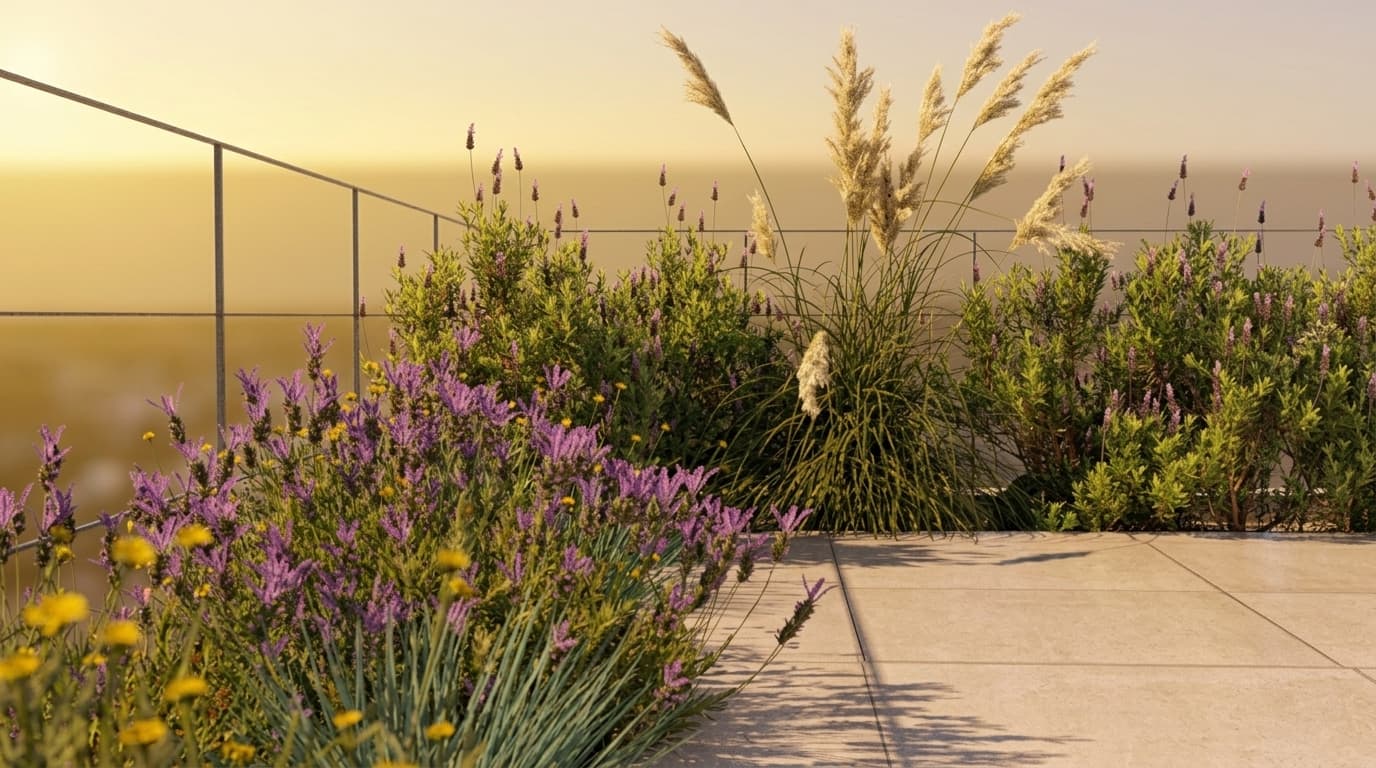
Why Photorealism Is Essential Before Construction
Investing in a professional 3D study before excavation machinery enters the property offers specific advantages that directly affect the project budget:
-
Eliminating On-Site Errors
Changing your mind about the position of a wall, a pathway, or a tree on a computer screen costs nothing. After excavation or planting, however, the cost increases dramatically. Photorealism allows you to “lock in” the final result with complete confidence.
-
Accurate Costing and Budgeting
The 3D study allows us to extract precise material measurements. You know in advance the exact quantity in square meters for paving, the length of irrigation pipes, and the number of plants required. This keeps the budget stable, without any “surprises.”
-
Lighting and Shading Study
Through photorealism, we can simulate the movement of the sun throughout all seasons of the year. This helps with the strategic placement of trees for natural cooling in the summer, as well as with the optimal design of architectural lighting for nighttime.
Artificial Intelligence for Inspiration, Science for Implementation
AI tools are excellent for the first stage of inspiration (moodboard), helping you discover, for example, which general style you prefer, such as a minimalist garden or a traditional Mediterranean garden.
However, moving from idea to implementation requires scientific expertise. At Ensogreen, our team combines agronomic knowledge with the most advanced digital design tools, transforming your vision into a garden that is resilient, cost-effective and, above all, fully applicable in reality.
Would you like to see your garden come to life before its construction begins? Contact us and let the experts at Ensogreen design a photorealistic study that guarantees the success of your investment.
Photorealistic Garden Design and AI: The Reality Behind the Image
The rapid development of Artificial Intelligence (AI) has revolutionized the way we approach image creation, directly affecting landscape architecture as well. Today, many AI platforms promise the impressive image of a “paradise-like” garden within seconds. The speed and visual appeal of these tools are undeniable.
However, in order to produce a truly complete and applicable result in Garden Construction, technology alone is not enough; the right scientific background, aesthetic perception and the ability to use proper “prompting” are required so that humans can collaborate effectively with the tool. At Ensogreen, we do not see AI as a threat, but as a modern tool that enhances the professionalism and accuracy of our studies, ideally complementing a professional photorealistic study (3D Rendering) based on agronomic science and engineering.
The Reality of Standalone AI & the Power of Professional Software
The main weakness of simple, standalone AI tools is that they do not “understand” the laws of nature or the technical specifications of an infrastructure project. They produce impressive images, but often impractical scenarios:
- Wrong plants for the Greek climate: AI may place tropical plants that require high humidity next to drought-tolerant Mediterranean trees, ignoring the climatic conditions of Evia or Attica.
- Nonexistent planting distances: In AI images, plants appear dense and “perfect” from day one. In reality, if planted this way, they will die within a few months due to lack of space, light, and nutrients.
- Ignoring infrastructure: An AI image cannot predict where the pipes for automatic irrigation will run, where a drainage network is required, or how the slopes of the land (terrain relief) affect the stability of structures.
In contrast, leading companies that provide 3D design and rendering software, such as Rhino and V-Ray, have now integrated advanced AI models into their systems. This development helps the scientific expert responsible for each project apply techniques of absolute precision to the final result and instantly test different variations.
What Is Ensogreen’s Professional Photorealistic Study?
At Ensogreen, garden design is not a random collage of images. It is an agronomic study using modern methods of three-dimensional visualization. When we create a photorealistic landscape design study, the 3D model is accurately aligned with the real dimensions and topographic data of your property.
Each plant placed in the design is selected based on five specific pillars:
- Microclimate: The specific climatic conditions of your area.
- Orientation: How the sun and shade affect the space throughout the day.
- Plant requirements: Their water needs, as well as their requirements for soil micro- and macronutrients.
- Functionality: The usability of the garden and its proper development over time, based on plant growth over 5 or 10 years.
- Aesthetics: The harmony of colors, materials, and volumes with the building.
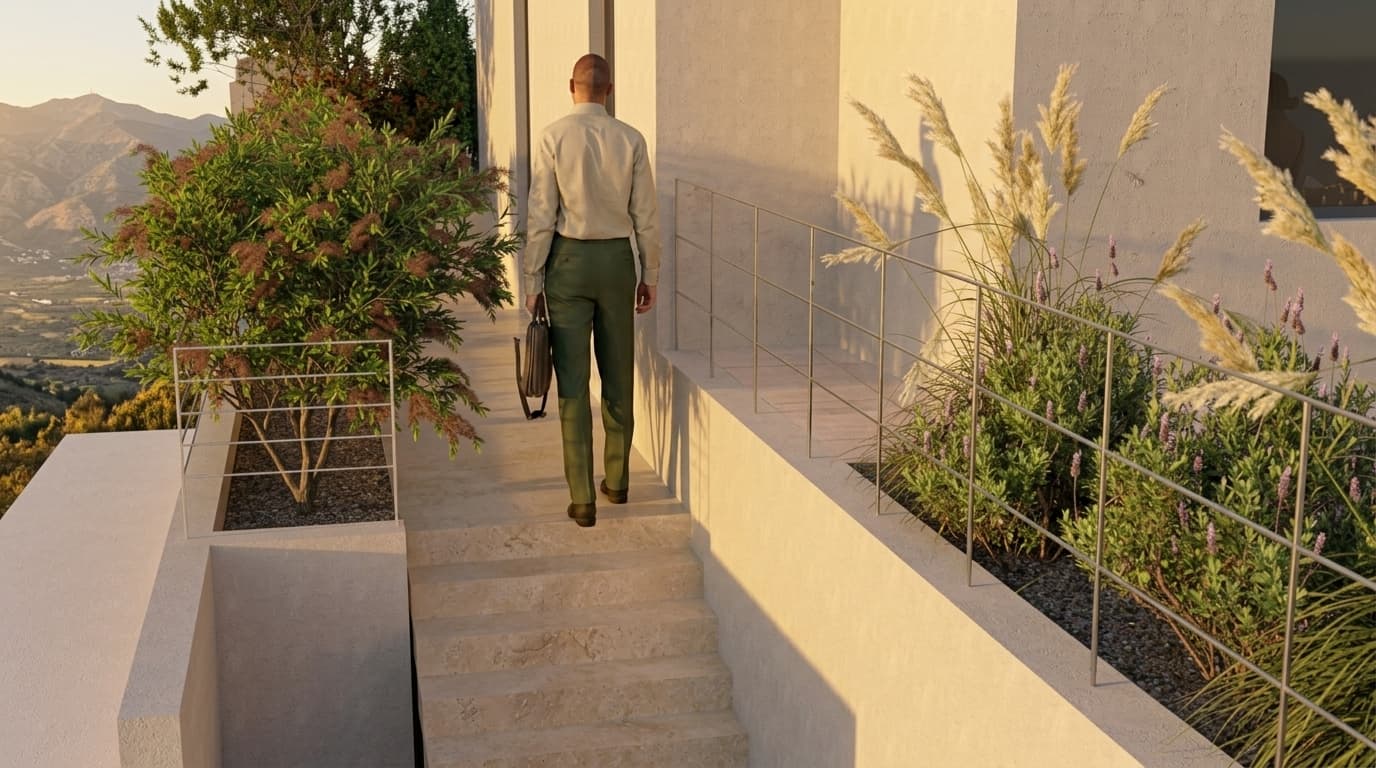
Why Photorealism Is Essential Before Construction?
Investing in a professional 3D study before excavation machinery enters the property offers specific advantages that directly affect the project budget, giving us the ability to run different “what if” scenarios:
-
Eliminating On-Site Errors & “What If” Scenarios
Changing your mind about the position of a wall, a pathway, or a tree on a computer screen costs nothing. After excavation or planting, however, the cost increases dramatically. Thanks to modern tools, we can test alternative “what if” layout and material scenarios, allowing you to “lock in” the final result with complete confidence.
-
Accurate Costing and Budgeting
The 3D study allows us to extract precise material measurements. You know in advance the exact quantity in square meters for paving, the length of irrigation pipes, and the number of plants required. This keeps the budget stable, without any “surprises.”
-
Lighting and Shading Study
Through photorealism, we can simulate the movement of the sun throughout all seasons of the year. This helps with the strategic placement of trees for natural cooling in the summer, as well as with the optimal design of architectural lighting for nighttime.
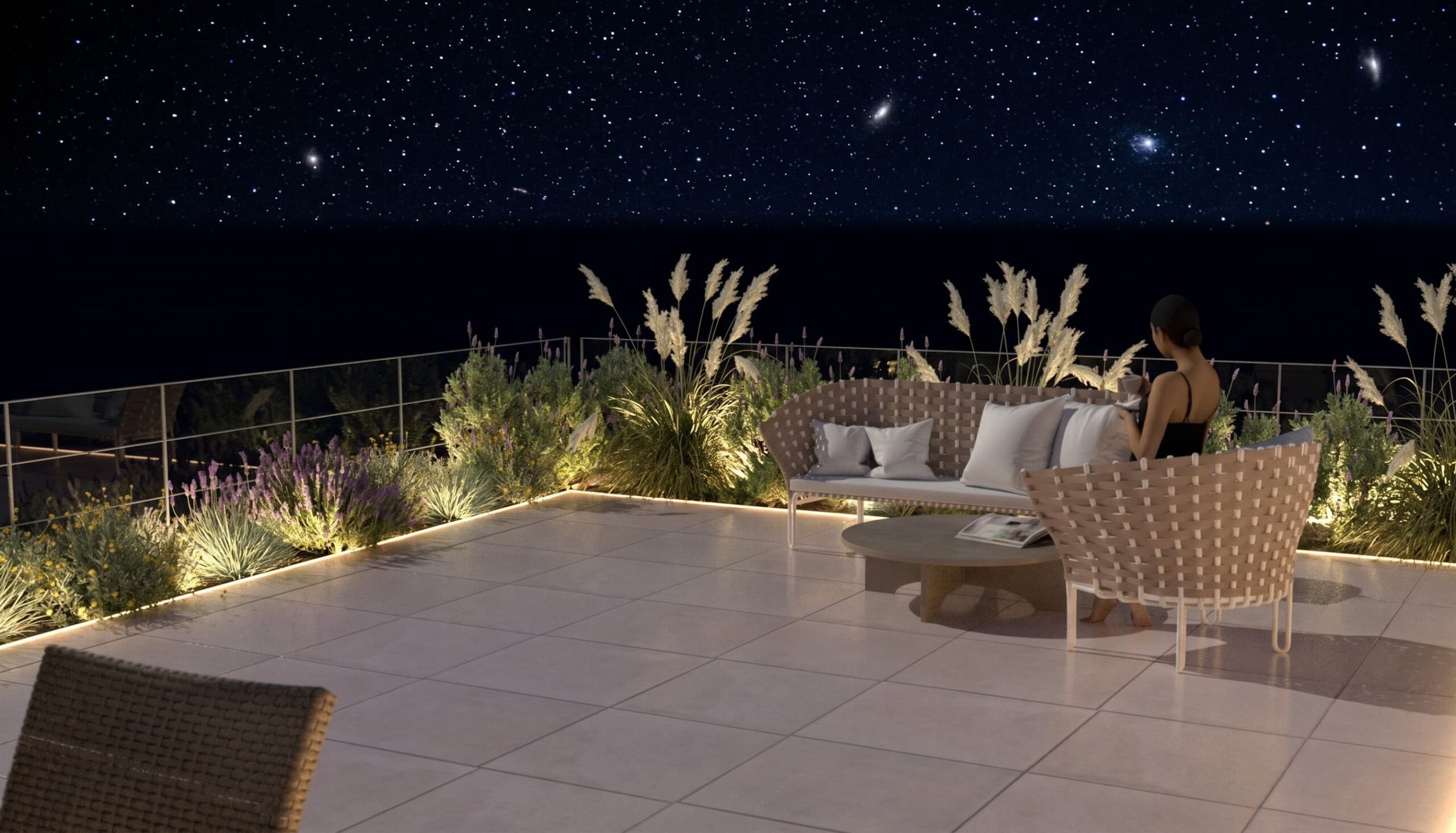
AI as an Auxiliary Tool, Humans as the Source of Inspiration
Modern AI tools are an excellent auxiliary tool for science, not the source of inspiration. True inspiration and creativity come exclusively from humans. Although GenAI models are capable of combining data from different sources and presenting something as innovative, the transition from a digital idea to real-world implementation always requires human scientific expertise.
At Ensogreen, our team integrates these advanced technologies to enhance the accuracy of its studies, transforming your own vision into a garden that is resilient, cost-effective and, above all, fully applicable in reality.
Would you like to see your garden come to life before its construction begins? Contact us and let the experts at Ensogreen design a photorealistic study that guarantees the success of your investment.